
Control Panel logic interface
Situation:
The Bowl Coiler vendor could not deliver a functional prototype on time. Haas attempted to run kitting without a Bowl Coiler, but it became clear this was not feasible or ergonomic. Running without it required an operator to stand in front of the machine all day collecting hoses by hand, which was not a sustainable process.
Challenge:
The first internal prototype of the Bowl Coiler could spin and collect hoses, but it relied on the operator manually turning the motor on and off. If the operator forgot to turn the motor back on, the Auto Hose Feeder would continue pushing hoses forward and eventually cause a jam or mechanical failure. I personally tested the workflow and experienced the same issue, so I understood the risk. This was the signal to move forward with a proper control logic solution that would integrate the Bowl Coiler with the Auto Hose Feeder.
Action Plan:
Research and collaboration:
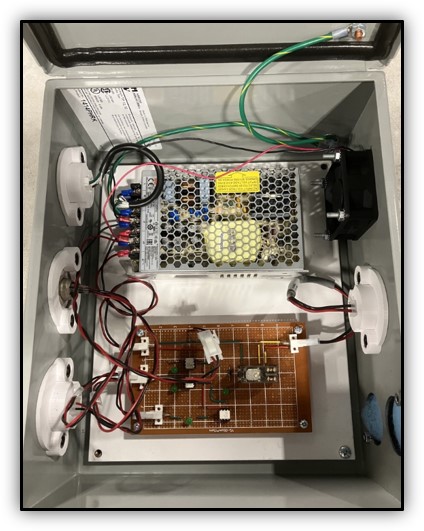
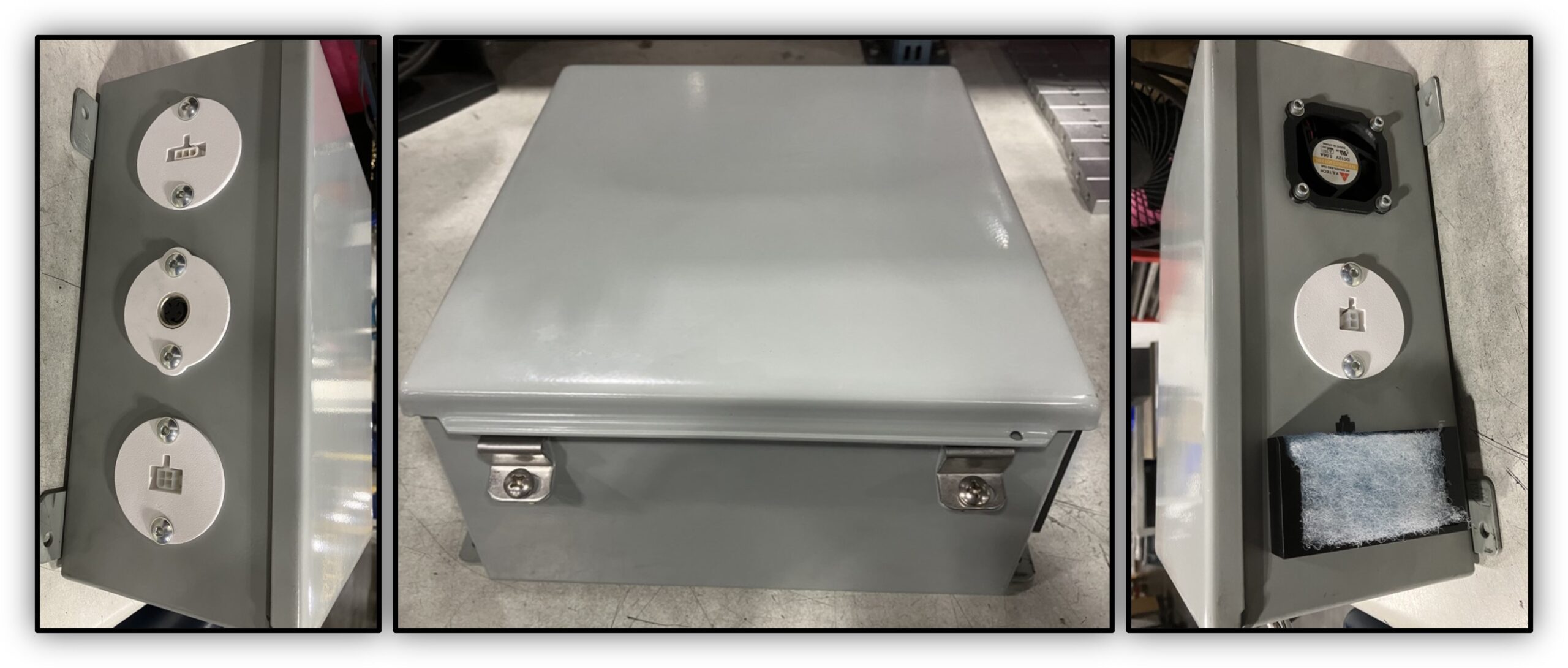
After interviewing operators and working with engineering colleagues, I designed a simple hardwired control logic system. This avoided the complexity of a microcontroller while still achieving smart control through relay logic.- Design intent:
The Bowl Coiler needed to stop under three conditions:
Cutting:
Tapped into the Auto Hose Feeder voltage signal so the Bowl Coiler stops whenever the machine performs a cut. This prevents the bowl from pulling against the hose during the blade stroke, which could damage the guillotine blade assembly.Alarm or Emergency Stop:
Used the system alarm voltage signal to stop the bowl whenever the Auto Hose Feeder goes into an alarm state. This allows the operator to rely on the standard E-Stop for complete system shutdown.Home Position:
Installed a proximity sensor inside the Auto Hose Feeder to detect the home position. This ensures the bowl stops in a safe zone where operators can grab hoses without risk of injury.
Conclusion:
The upgraded Bowl Coiler system made hose kitting fully unattended. Operators no longer need to stand by the machine, which frees them to focus on cleaning, restocking, and other productive tasks. The system now runs without hose jams, eliminates downtime risks, and consistently produces clean, reliable hose kits with a simple start button for each job.